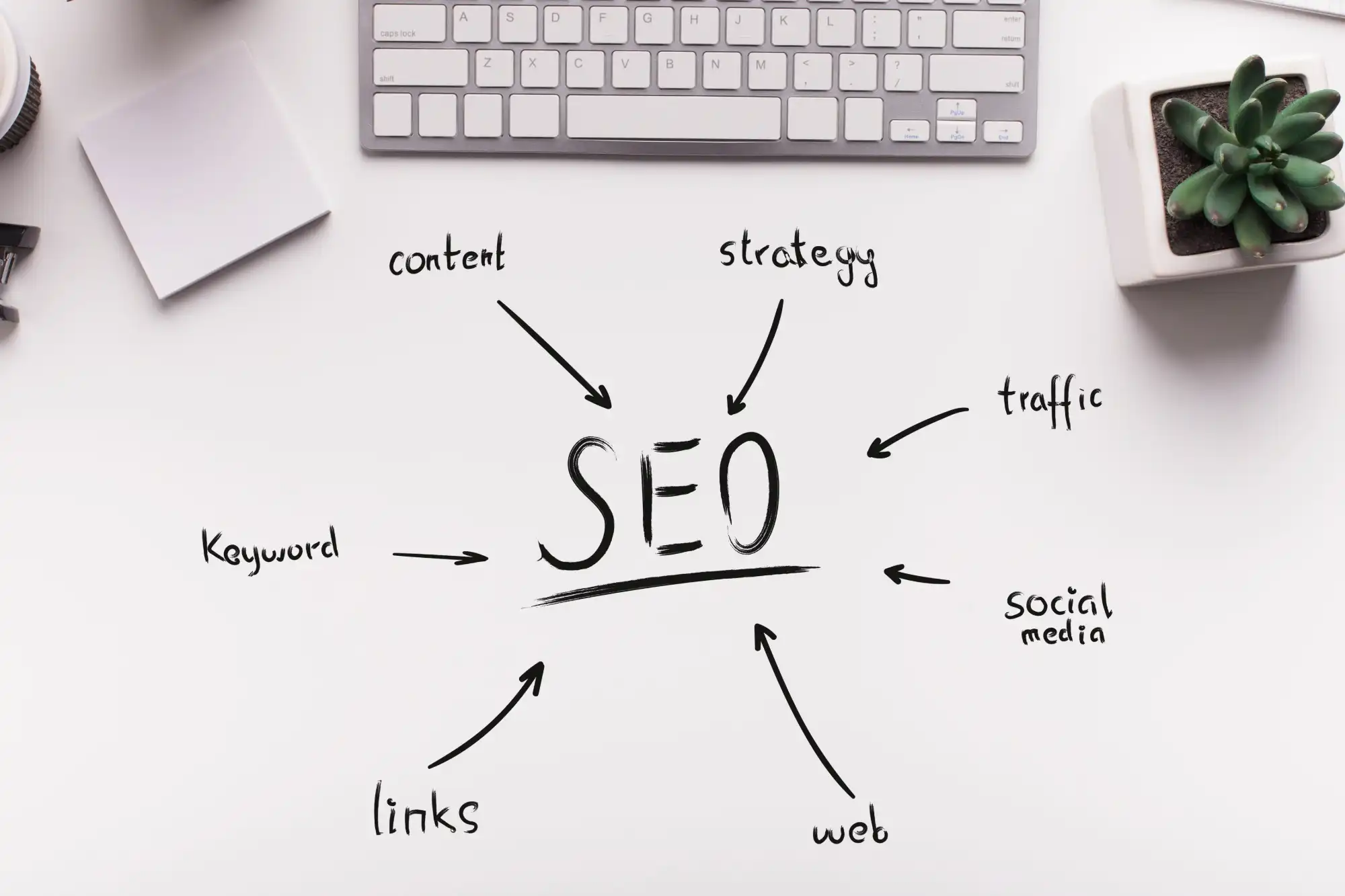
When you launch a new business website, the design and content often take center stage—but without search engine optimization (SEO), your ideal customers might never find you. SEO is how your site shows up when someone types a question into Google. It’s not magic—it’s strategy.
Whether you’re building your first site or refreshing an old one, understanding SEO fundamentals can mean the difference between a website that sits invisible in cyberspace and one that consistently brings in new customers. The good news? You don’t need to be a technical expert to implement effective SEO strategies.
Here are the essential SEO building blocks every new business website needs to succeed online.
Understanding SEO: Why It Matters for Your Business
Search engine optimization is the practice of improving your website so search engines can understand, index, and rank your content for relevant searches. When potential customers search for products or services you offer, proper SEO helps your website appear in those search results.
Consider this: 93% of online experiences begin with a search engine, and 75% of users never scroll past the first page of search results. If your website isn’t optimized for search engines, you’re essentially invisible to the vast majority of your potential customers.
The investment in SEO pays dividends over time. Unlike paid advertising that stops working the moment you stop paying, good SEO continues bringing traffic to your website 24/7, generating leads and sales while you focus on other aspects of your business.
1. Start With Strategic Keyword Research
Think of keywords as the bridge between what your audience is searching for and what your website offers. Effective keyword research forms the foundation of all your SEO efforts.
Action Steps for Keyword Research:
Use free tools like Google Keyword Planner, Ubersuggest, or Google Trends to identify search phrases your potential customers are using. Focus your research on three key areas:
Long-tail keywords: These are longer, more specific phrases like “eco-friendly dog grooming in Austin” rather than just “dog grooming.” While they have lower search volumes, they often have higher conversion rates because they indicate stronger purchase intent.
Local intent keywords: Include phrases with “near me,” your city name, or neighborhood references. Local searches often lead to immediate business, making them extremely valuable for service-based businesses.
Commercial intent keywords: Look for phrases that indicate someone is ready to buy, such as “best,” “reviews,” “buy,” “hire,” or “services.”
Pro Tip: Don’t keyword stuff—this practice actually hurts your rankings. Instead, use keywords naturally in your headlines, page content, and metadata. Focus on creating valuable content that happens to include your target keywords rather than forcing keywords into awkward sentences.
2. Master On-Page SEO Elements
Each page on your website should focus on a single topic with SEO-friendly formatting that helps both search engines and users understand your content.
Essential On-Page Elements:
Title Tags: Your page title should be compelling and include your primary keyword. Keep it under 60 characters so it displays fully in search results. Think of your title tag as your first impression—make it count.
Meta Descriptions: While not directly a ranking factor, meta descriptions influence click-through rates from search results. Write compelling descriptions under 155 characters that include your keyword and encourage clicks.
Header Structure: Use one clear H1 headline per page that includes your primary keyword. Organize your content with H2 and H3 subheadings to create a logical structure that’s easy to scan.
URL Structure: Create clean, descriptive URLs like yourdomain.com/affordable-web-design instead of yourdomain.com/page123. Include your target keyword when it makes sense.
Image Optimization: Add descriptive alt text to all images. This helps search engines understand your visual content and improves accessibility for users with visual impairments.
Internal Linking: Link to other relevant pages on your website to help search engines understand your site structure and keep visitors engaged longer.
3. Create Quality, Helpful Content That Ranks
Search engines love content that answers real questions and provides genuine value. That’s what helps you rank—and what keeps visitors on your site long enough to become customers.
Content Strategy Suggestions:
Blog Posts: Write articles that solve common customer problems or answer frequently asked questions. For example, if you’re a financial advisor, create content about retirement planning tips or tax-saving strategies.
Service Pages: Clearly explain what you offer, how it benefits customers, and what makes you different from competitors. Include specific details about your process, pricing (if appropriate), and what customers can expect.
Location Pages: If you serve multiple areas, create dedicated pages for each location with unique content about local services, community involvement, and area-specific information.
Resource Pages: Develop downloadable guides, checklists, or tools that provide immediate value to your audience while capturing their contact information.
Remember: You’re writing for humans first, algorithms second. Focus on creating content that genuinely helps your audience, and search engines will reward you with better rankings.
4. Dominate Local SEO
If you’re a local business, local SEO is non-negotiable. Local searches often have the highest conversion rates because they indicate someone ready to take immediate action.
Local SEO Action Items:
Google Business Profile: Set up and completely optimize your Google Business Profile (formerly Google My Business). Add photos, hours, services, and respond to all reviews promptly and professionally.
NAP Consistency: Ensure your business Name, Address, and Phone number are identical across all online directories and your website. Inconsistent information confuses search engines and can hurt your local rankings.
Local Directory Listings: Submit your business to relevant local directories like Yelp, Better Business Bureau, and industry-specific directories. Quality over quantity matters here.
Location-Based Content: Incorporate your location naturally throughout your website content, including in your footer, contact page, and service descriptions.
Customer Reviews: Actively encourage satisfied customers to leave reviews on Google and other relevant platforms. Respond to all reviews, both positive and negative, in a professional manner.
5. Ensure Mobile-First Performance
Google uses mobile-first indexing, meaning it primarily uses the mobile version of your site for ranking and indexing. If your site doesn’t work well on phones, you’re losing both rankings and customers.
Mobile Optimization Essentials:
Test your website on various devices and screen sizes regularly. Use Google’s Mobile-Friendly Test tool to identify and fix mobile usability issues.
Ensure buttons and links are easily clickable on small screens, text is readable without zooming, and navigation menus work smoothly on touch devices.
Consider implementing Accelerated Mobile Pages (AMP) for blog posts to improve loading speed on mobile devices, though this isn’t necessary for all websites.
6. Optimize for Lightning-Fast Site Speed
A slow site hurts your SEO rankings and user experience. Studies show that 53% of mobile users abandon sites that take longer than three seconds to load.
Speed Optimization Tips:
Image Compression: Compress images before uploading them to your website. Tools like TinyPNG or built-in WordPress plugins can reduce file sizes without noticeably affecting quality.
Quality Hosting: Invest in fast, secure hosting from a reputable provider. Cheap hosting often leads to slow loading times and frequent downtime, both of which hurt your SEO efforts.
Minimize Heavy Elements: Limit the use of large videos, complex animations, or excessive scripts that slow down your site.
Enable Caching: Use caching plugins or services to store static versions of your pages, reducing server load and improving loading times for repeat visitors.
7. Implement Analytics and Monitoring
You can’t improve what you don’t measure. Setting up proper analytics helps you monitor traffic, understand what’s working, and identify opportunities for improvement.
Essential Monitoring Tools:
Google Analytics: Track website traffic, user behavior, and conversion goals. Set up goal tracking to measure how many visitors complete desired actions like filling out contact forms or making purchases.
Google Search Console: Monitor your search rankings, identify technical issues, and see which keywords bring traffic to your site. This tool also alerts you to penalties or problems that could affect your rankings.
Regular SEO Audits: Conduct monthly reviews of your SEO performance, looking at rankings, traffic trends, and technical issues that need addressing.
Building Long-Term SEO Success
SEO isn’t a one-time task—it’s a long-term strategy that compounds over time. The efforts you put in today will continue paying dividends months and years into the future.
Start with these fundamentals to ensure your website is built to be found, trusted, and clicked. As your business grows, you can explore more advanced SEO strategies like technical SEO, link building, and content marketing automation.
The key is consistency. Regular content creation, ongoing technical maintenance, and continuous optimization based on performance data will help your website climb search rankings and attract more qualified leads.
Remember, SEO success doesn’t happen overnight, but businesses that invest in proper optimization from the start consistently outperform competitors who treat SEO as an afterthought.
Ready to Transform Your Website Into a Lead Generation Machine?
If you’re unsure where to start, or want to ensure your site is optimized for maximum visibility and conversions, our team specializes in helping small businesses turn websites into growth engines.
We offer comprehensive SEO audits that identify exactly what your website needs to rank higher and attract more customers. From technical fixes to content strategy, we provide actionable recommendations that deliver real business results.
Want a free SEO mini audit of your site? Schedule a 15-minute consultation where we’ll review your current SEO setup and provide specific recommendations for improvement. No sales pitch—just valuable insights you can implement immediately to start seeing better results from your website.
Ready to get started? Contact Joshua Smith Digital today to discover how proper SEO can transform your online presence and drive sustainable business growth.